
What every financial advisor needs to know about long-term care planning

You've got the retirement income conversation down cold. Social Security timing. Withdrawal rates. Medicare premiums. You've modeled it all.
And then one expense wipes out the plan you spent years building.
That expense is long-term care (LTC) — and most financial advisors aren't planning for it.
Here's why that's a problem, and what to do about it.
The stat every advisor should have memorized
70% of people who reach age 65 will need some form of long-term care in their lifetime.*
That's not a fringe scenario. It's the most likely outcome for your average retiree client. And here's the part that quietly bankrupts plans: Medicare doesn't cover custodial care** — the help with bathing, dressing, and daily living that's actually what most people need. It covers skilled nursing after a hospital stay, for a limited time. After that, your client is on their own.
So the expense lands squarely on the retirement savings you so carefully built.
What “on their own” actually costs
The numbers move fast:
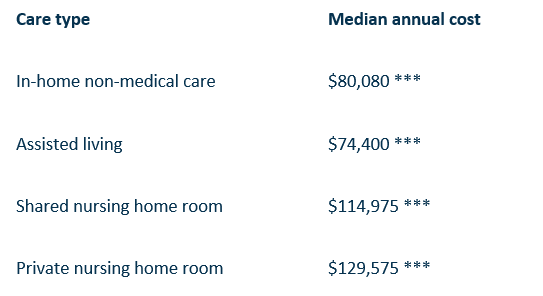
A client can burn through a decade of disciplined saving in two or three years of care. The Monte Carlo simulation that said they'd be fine to 95? It wasn't built for $130,000 a year in custodial costs. None of them are.
Why most advisors skip LTC planning (and why that’s a mistake)
Let's be honest about why it doesn't happen:
It's complicated. Traditional LTC insurance, hybrid policies, asset-based solutions, self-insuring — the landscape is a maze.
The conversation is uncomfortable. You're asking clients to picture a future where they can't care for themselves.
Nobody trained you on it. It wasn't in your CFP coursework. It's not in most CE. So you mention it, move on, and hope for the best.
Here's the catch: your clients are trusting you to see around the corner. If the biggest single threat to their retirement is the one thing you haven't addressed, that's a gap — in their plan and in your value proposition.
How Peak Pro helps advisors plug in LTC planning
You don't need to become an LTC specialist overnight. Peak Pro helps advisors add long-term care planning to their practice — seamlessly — with three pillars:
1. LTC training. The foundation — how the products work, how to weigh trade-offs, how to match a strategy to a client's situation. Working knowledge you can use in a real conversation, not a jargon dump.
2. Sales coaching. The hardest part of LTC planning isn't the math. It's the talk. Peak Pro helps you raise the topic without sounding like a salesperson, handle objections, and guide clients toward a decision — without pressure. When clients understand the risk, most want to act. They just need someone to show them how.
3. Case design expertise. When a client is ready, you shouldn't be guessing at structure. Peak Pro helps you design cases that fit — traditional policy, hybrid, or a self-insuring strategy with dedicated assets. You bring the relationship. They bring the technical depth.
The result: you add a capability most advisors don't have, serve clients more completely, and protect the plans you've already built.
Two clocks are ticking
For your clients: The ideal window to buy LTC insurance is the 50s to early 60s, while they're still healthy. Buy earlier, lock in lower premiums. Wait too long, and the options narrow — sometimes to zero.
For your practice: The advisors who build an LTC process now are the ones ready when a client needs it. The ones who wait are the ones scrambling after a diagnosis, when it's already too late.
You've seen what happens when families run out of time. Don't let it happen to your clients — and don't let it be the gap in your practice.
The bottom line
You don't need to overhaul your business. You need to add one piece — the piece that protects everything else.
Peak Pro gives financial advisors the LTC training, sales coaching and case design expertise to help better serve clients and stand out from other advisors who still aren't having the conversation.
Ready to add long-term care planning to your practice? Reach out to Peak Pro and get started.
FAQ ABOUT LTC
Does Medicare pay for long-term care?
No. Medicare typically covers skilled nursing or rehabilitation for a limited period after a qualifying hospital stay. It does not usually cover custodial care — help with daily living activities like bathing, dressing, and eating — whether provided at home, in assisted living, or in a nursing home.
How much does long-term care cost?
As of recent CareScout data, median annual costs are roughly $80,080 for in-home care, $74,400 for assisted living, $114,975 for a shared nursing home room, and $129,575 for a private nursing home room.*** Costs are rising.
What percentage of people will need long-term care?
About 70% of people who reach age 65 will need some form of long-term care in their lifetime.*
When should clients buy long-term care insurance?
The ideal window is generally the 50s to early 60s, while the client is still relatively healthy. Applying earlier typically means lower premiums and better approval odds.
How can financial advisors add long-term care planning to their practice?
Partnering with a specialist like Peak Pro gives advisors the LTC training, sales coaching and case design support needed to integrate long-term care planning seamlessly — without becoming specialists themselves.
SOURCES
*Administration for Community Living (ACL), U.S. Department of Health and Human Services. "How Much Care Will You Need?" — "Someone turning age 65 today has almost a 70% chance of needing some type of long-term care services and supports in their remaining years." https://acl.gov/ltc/basic-needs/how-much-care-will-you-need. See also: ASPE/HHS & Urban Institute research brief, "What Is the Lifetime Risk of Needing and Receiving Long-Term Services and Supports?" (2019), which found that 70% of adults who survive to age 65 develop severe LTSS needs before they die. https://aspe.hhs.gov/reports/what-lifetime-risk-needing-receiving-long-term-services-supports-0
**Administration for Community Living (ACL), U.S. Department of Health and Human Services. Medicare covers skilled nursing or rehabilitation for a limited period after a qualifying hospital stay, but does not cover custodial care — assistance with activities of daily living such as bathing, dressing, and eating — whether provided at home, in assisted living, or in a nursing home. https://acl.gov/ltc/basic-needs/how-much-care-will-you-need
***CareScout 2025 Cost of Care Survey (data collected July–November 2025). National median annual costs: in-home non-medical care $80,080 (based on 44 hours/week × 52 weeks at $35/hour); assisted living $74,400 ($6,200/month × 12); shared nursing home room $114,975 ($315/day × 365); private nursing home room $129,575 ($355/day × 365). https://www.carescout.com/cost-of-care. Survey results release: Genworth/CareScout press release, March 2026. https://investor.genworth.com/news-events/press-releases/detail/1054/carescout-releases-2025-cost-of-care-survey-results